What do an internationally-known wedding photographer and Nest Realty have in common? It turns out, quite a bit. Join us for a fascinating conversation with Eric Kelley, who has shot 650 weddings since 2004, and travels “all over the world, from Budapest to Ireland.”
You can listen to the podcast here, and subscribe to the podcast here.
Some highlights include:
– Photographers who inspire him
– The value of wedding planners
– Scaling Up book
– Eric’s four criteria for accepting a job: date, location, scope of the job, other vendors on the job
– Independence, confidence, and fear
– Sharing availability
– Engage Summit, the Wedding Business Summit
– The focus on the client experience, the process of sitting down with the client, setting expectations and the approach.
– Who is your ideal client? Bridging the gap between people.
– Legacy clients
– Planning for the future
– Pre-empting questions, and the value of having a team in place
We hope you’ll join us for the next episode of Sweat the Details. View the full transcript below.
TRANSCRIPT
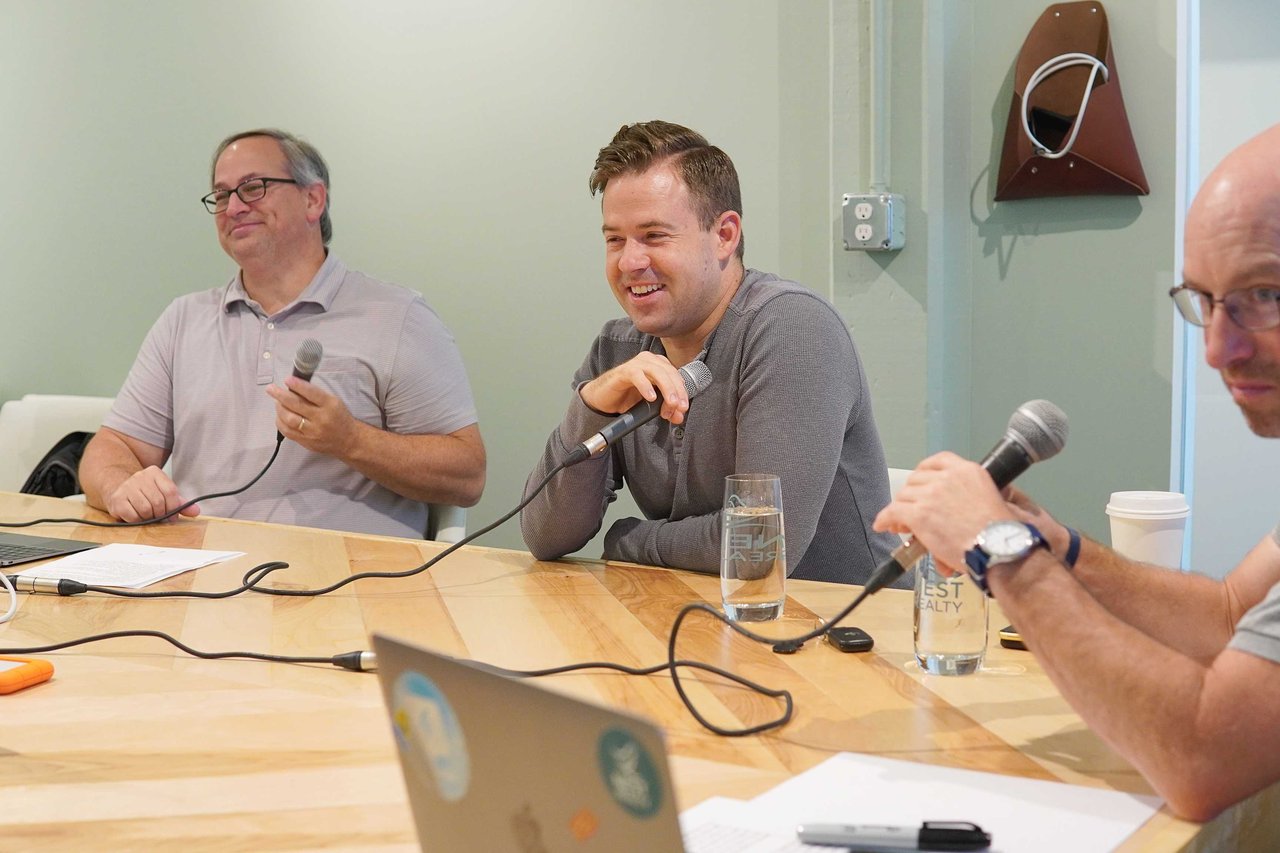
Jim Duncan: Hey this is Jim Duncan with Nest Realty. This time we’re joined by Eric Kelley, a Charlottesville-based wedding photographer and he documents weddings and events nationally and internationally. He’s been on the best photographer’s list for Harper’s Bazar and Martha Stewart Weddings since 2016. We talk about a wide range of topics—from how he scouts locations, building and developing client relationships, and he’s got a fast-growing referral network for wedding photographers. We talk about how and whether he is going to scale himself and how he’s choosing to live a proactive life. Eric is also married to singer/songwriter, Lora Kelley. They have two kids, two crazy dogs, and he’s called Charlottesville home since he arrived at UVA in 2002.
How many weddings a year do you do?
Eric Kelley: I’m currently doing 25 this year. Last year was about the same number. 2017 was only 13 because I was burnt out and I wanted to quit. But I’ve done about 650 weddings since 2004, when I started. Give or take 10%.
Jonathan Kauffman: And how did you get into it? Tell us that story about... I mean obviously you had a love for photography...tell us about that.
Eric: Yeah, so I loved photography kind of from when I was little. I’ve kind of romanticized how good my Dad was at photography. I don’t know that he was really a great photographer, but he had a camera and it was stolen and his photos were never the same after the camera was stolen. And so I just always kind of had a desire to make photographs for some reason, and saw photos from grandparents from the 20’s and from older than that. And so I’d always loved it. I did some in high school, and actually on September 11th, 2001, I was taking some photographs at my school and I remember taking a photograph and the moment I clicked it, I said,” This is what I’m supposed to be doing.” Like I had this revelation while I was taking this photo of the kids praying in my school of feeling the full weight of everything that was going on. And I was like, “This is what I’m supposed to do.”
Jim: Do you still have it?
Eric: Yeah. And it was in the school newspaper. Only a few times in my life I’m like, “This is what it’s supposed to be like.” And that was one of them. So I did photography for school, got to UVA, did photography at UVA, did a lot of sports photography. And then Jennifer Fariello, who’s a local photographer, she came to my class at UVA, she was just a few years out of school and she came to talk about lighting. And she was shooting mostly film, but she came to talk about off camera lighting, which like thinking back now, I’m like, “I don’t know why they chose to have her talk about lighting.” Just because you know her work, it’s very organic and natural light and...
Keith Davis: Right.
Eric: Anyways.
Keith: She’s not one that would typically be thought of as the artificial lighting queen.
Eric: Right. Right. And so she was talking about her assistant and I was like, “Hey, do you need another assistant or anything?” So she connected me with Bill and Ann Holland, Holland Photo Arts, who was around a few years ago. And so from spring of 2005 to the end of 2007 I worked for them. And when I graduated in 06′, I had studied with them and I was like, “I need insurance.” This was pre-26 year old keeping on their parents’ insurance. So I needed insurance when I graduated. And so I started working full time for them and had apprenticed with them and associate shot with them, the one way can scale. And so in the end of 2007 I went out on my own and started shooting weddings by myself. In 2008 with Jack Looney and a few other photographers in town. I just assisted as much as I could, did about 45 or 50 jobs that year between second shooting and then my own jobs and then just kept going.
Keith: So how did it move then from a primarily Charlottesville based to more of the traveling work that you do now?
Eric: So in the early days I was going to Veritas nonstop.
Jim: That’s a local vineyard?
Eric: Which is a local vineyard, winery and vineyard out in Afton and while it’s beautiful and I loved it, I was like, “If I have to go to this ballroom and this wine cellar and if I have to do this another time, I’m going to pull my hair out.” And so around the same time I started getting introduced to photographers nationally. And I saw one in particular, Jose Villa, and I loved his work. And we also realized that people were charging (he was) upwards of $25,000 for wedding photography. So he said, “I’m going to go there, I want to go there.” And so by setting my sights on $25,000 weddings, there’s only a few in town every year.
Jim: How big is that 25 grand market? I mean worldwide, because you travel all over the world. I love your Instagram...because I look at all the awesome places I’ve never been..and and how big is that market internationally and how did you take that track?
Eric: So I would say that there’s about a dozen photographers like me in the United States and worldwide, there are only a few more. So maybe two dozen photographers that are shooting like me and charging that amount. There are people that are charging way more than that. Mario Testino will do a wedding for $350,000, probably. Maybe not. I don’t know. But there are a few photographers, few fashion photographers that will charge an exorbitant amount of money. And when you have billions and billions of dollars, what’s a couple hundred thousand dollars for this amazing photographer that has all this clout? So with that, there aren’t many people doing it, but there are enough to provide me with 20/25... My average this year was just about $20,000 per wedding. So they weren’t all that level. Some of them were lower. That doesn’t mean that I have to make that much money to do a job. And setting my prices high has allowed me to work locally for less. And when a planner calls me, I’m just like, “This is my normal price, but if I get to sleep in my bed, tell me what I need to do.” I’m not unwilling to work for less than that, but...
Jim: So how do you scout? You go to all these places all over the world, how do you scout? If someone says this remote island in Greece, do you Google it? Do you... How do you...?
Eric: Google is my friend. So most of my weddings that I’m booking now are mostly coming from wedding planners. And so they’ll tell me the name of the venue and I’ll Google it. And for instance, I’m going to Mallorca, Spain in the end of September and it’s at this fort that’s on its own peninsula. I don’t know even know the name now, but I Googled it and I was like, “This is my dream job.” And so I just did a little bit of research research to figure out where it was and what it looked like. Scouting though, I try to go a day or a day and a half early so that I can scout the location and scout the different places. But I rely a lot on the wedding planners to organize the event really well. And that takes some of the pressure off of me to have to find locations because they’ve already found the locations and they know what they want it to look like in the end. So it’s really helped. Where it’s hard is those jobs that don’t have planners or they’re at a family’s estate. There’s only so many places you can go.
Keith: So I would assume though, that if they’re only a dozen photographers like you in the U.S., there’s also probably only 15 wedding planners who are at this tier and that you guys are working with very similar teams in many of these places. Do you find that you’re communicating with the other members of the team to find out other pieces that are specific about the location if they’ve been there before, or are most of the spots kind of first time for everybody spots?
Eric: There are a few locations around that I will definitely reach out and be like, “Hey, well how was this, or what do you think of this?” But a lot of them are like...I got a 900 person inquiry. I didn’t end up getting the job, but I got a 900 person inquiry for a little town in the middle of Louisiana. I don’t know...but I actually know the other four photographers that provided a quote or a proposal to this planner, and I know that the two in the final running of this wedding. But we talk, we all know each other. We’re all acquaintances, friends when we’re together. So, I kind of feel like, and I feel like the others feel like a rising tide lifts all ships. And so we’re kind of all in this together. I know that I’m going to win some, I know that I’m going to lose some, but hopefully we’re all getting enough work from each other, or from the wedding planners. And there are a couple dozen wedding planners. I thought that there were only three or four that were doing these, and then I was talking to a wedding planner and she’s like, “Yeah, we did $2 million weddings in one day”, like where they spent $1 million over the weekend for the wedding. She’s like, “My company did two in one weekend”, and I was like, there aren’t only four wedding planners that are doing big dollar weddings. There are a multitude. And so there... 25 maybe there’s more than that. I’m not sure. I’m still meeting new ones.
Keith: So, obviously the limiting factor for your businesses is Eric Kelley, right? You can’t just be in multiple locations doing the weddings at one time. How do you begin to looking at scaling or, you had said at one point you started doing less weddings just because you were burning out. Is there a way to change the scalability of your business? Is there a way to train people to be able to take within your quality or how does the future of that business look?
Eric: Yeah. So a couple of years ago I started reading the book, Scaling Up, Mastering the Rockefeller Habits, and I realized from that, but also other conversations, that I couldn’t scale myself. I was doing some work with Borrowed and Blue a few years ago, and...
Jim: They were a wedding site, some sort of...
Eric: They were a wedding website. Borrowed & Blue was a wedding website and some things happened, and Zola is a registry company, but they now, they bought all the assets from Borrowed & Blue and have taken on the content. So really, couples will go to this website and search for vendors to find for their jobs. The question about scaling was that I realized I couldn’t scale myself. I was only me. So I have a supply and demand problem where I get four or 500 inquiries a year and I can only take 10 to 20 of them. So what do I do with the other 380, 480 inquiries that I get? And so that’s when I really started thinking about the referral system. So for me I decided to stay myself and not hire associates, which is another way you can scale. You can bring on another photographer, two, three, four and you make you make some money, but it’s a whole lot more work. And I wasn’t ready for that. When I was thinking about all of this.
Jim: It sounds like a lot more management of people than taking pictures of people.
Eric: Yeah.
Keith: Well it also feels like a risk that you’re, you’re now putting your name, your brand on someone else’s work and someone else’s composition and eyes and lighting and everything else that goes with it, that the output may not be what the buyer was expecting when they hired your firm to do the work.
Eric: Right. And I think that it’s harder for a a personal name associated with the company rather than, so there’s a videography company called Elysium Productions, and the owners Julie Hill, like it’s not Julie Hill Videography, it’s Elysium. So they’ve got six or seven teams. So every weekend they’re doing five or six or seven teams. Doing weddings, these teams are around the country, around the world really. And they’ve got a really good production system in the back in California. And I just, I wasn’t wanting to go that route a few years ago. I wanted to...
Jim: Well that’s not you, that’s not you.
Eric: I definitely have feelings sometimes when I’m like, “Okay, I’m ready.” And then I’m like, “No, I’m not ready.” And then I’m ready and then I’m not ready. So, I’ve been laser focus for the last two years on just going toward me and by myself with a team of people that help support me and trying to figure out some other side hustles or side revenue things that I can work on.
Keith: Does your family travel with you?
Eric: They have traveled with me to a few weddings. We were out in Colorado a couple of years ago and got a big Airbnb for the family and for the assistant and the videography team. And so we all kind of hung out. But my wife’s one requirement was for the client to fly us out on their plane. And so she flew, they flew, the kids all flew out nonstop from D.C. to Denver and then private to the venue. And so she was like, “That’s the only way I’m doing this.” And they’re like, “Okay. Yeah.” So no, we don’t go very often. We did go to The Bahamas a few months ago for a big luxury event summit that I go to called Engage Summits. And so the kids came, swam in the pool, swan in the the ocean, and Laura’s mom also came with us. So occasionally, but now, let me get there and let me get back and be done with it.
Jim: No distractions?
Eric: No distractions. Yeah. Yeah.
Jonathan: Well talk to us about your side hustles and this referral network. We’d love to hear about that. It sounds like it’s been in the works for a couple of years and we heard about how it’s evolved, but we’d love to hear more about what the process is and what the future of that is.
Eric: Yeah. So like I said, a few years ago started thinking about referrals and trying to scale my business and I realized that there are tiers to wedding photography and how much you charge. So when you’re first starting out, let’s say you’re in the $500 to $2,500 range, and then you’re in this like two to five and a half thousand dollar range with like limited coverage and then you add more stuff that you deliver. And then you’re in the four to $8,000 range and then the seven to $12,000 range. So there’s these different bands and most people, one, every job that I get is based on availability. So, “Hey, are you available for my job? And what do you charge?” They’re never just saying, my date’s flexible. Every once in a while their date is flexible, but for the most part there is a particular time when they need me to work, and I am faced with a decision, do I want to say I’m available for this job and charge less because they don’t have the budget that I really want? Or should I pass it off to somebody?
So I started thinking about how to build a referral network. And I know that, I don’t know all of the details of it, but I know that in realty there is a referral commission if I send somebody to you, I don’t know how it works, but there are other industries that have referral fees that are required, and there are other industries where there’s no referral fee. There’s not even a thought about it. It’s like, “Oh, I share with you, you share with me.” It’s a quid pro quo kind of thing.
But I knew that a lot of the people that are charging less than me are never going to be able to send me an inquiry, and never gonna be able to send me a referral. And so I started analyzing it, I started thinking about it, and I found that most people, while they didn’t like me charging them a referral fee, they were willing to offer me a referral fee.
So I changed the conversation about it and found that people more often than not, or on average we’re willing to give about a 6% referral fee for a job that I could send them that they could book. And so, I built an Excel spreadsheet and I put every day in the calendar. My vertical columns were the months, months and days and I just started like marking off my availability. And so the first iteration was an Excel spreadsheet with multiple tabs that I just put my friend’s names in and I said, “Will you fill in green when you’re booked? And so I can see the dates that you’re available.”
And this idea really started when I was on a plane and I got an inquiry from somebody and I sent it to my friend Laura and she texted me back and I just replied to the couple and I was like, “Hey, I’m not available, but my friend Laura is awesome. We just worked together. You should call her.” And she texted me and she said, “Thanks so much. I’m not available.” And it hit me right then...
Keith: You have to vet them before... You got to check that before you
Eric: I have to know who’s available before I send them something. So I’ve been building this system around availability, and so I have 1,700 people on referral.network now. Mostly all photographers. I knew that I needed to start very small, very niche.
Jim: That’s not small. 1,700.
Eric: It feels small when I think about the potential of referral network. And so I’ve got about 450 users on my Facebook group that we kind of talk about things. And so I’m trying to figure out how to get every person to build their own little network that they can have people upstream that can send them jobs and can see this person’s availability. And they also have downstream that they can see their availability and consent jobs too. So you can give and you can receive referrals and it’s all based on availability, because who wants to send something to somebody when they’re overloaded with work already?
Keith: So just wondering, obviously within the wedding arena there’s always the ubiquitous wedding band, right? And they always have managers. They’re doing several different types of venues, but weddings are certainly a good moneymaker for the band. They have managers who manage that schedule who have websites with 1,500 different bands that go up and down the East coast or whatever area. Why have photographers never found themselves in that type of a relationship with somebody who does manage the schedules for larger groups? Why have you stayed independent in your entire business booking cycle?
Eric: That’s a really great question. I have not actually thought about that, but I think it’s a great question and I think that a lot of people are prideful and don’t want to have relinquished control of things. It took me a long time to relinquish control on picking the images that I’m going to deliver to the client and editing the images that I’m going to deliver it to the client. And so now I have people that help me with both of those things. But it takes a long time to relinquish control, and we’re all kind of small business owners and we don’t know what we don’t know yet. And there hasn’t been a great manager of that ever anywhere in the world that we’ve come across.
Jim: I think it’s also confidence and fear. I mean you have to have confidence in the product that you’re delivering to be able to relinquish that. And you’re also fearful of if Eric, if you build up Sally or whomever, she’s going to be a competitor.
Eric: Right, right. And that is a fear that a lot of people have. I don’t have that fear because I’m like, “Maybe she’ll be a competitor, but there should be enough work to go around and she’s probably going to be a couple of years behind me.” And who knows where I’m going to be when she reaches my level and maybe we’ll compete. That’s fine.
I think also a big thing is that people don’t want to share their availability with people out in the world because they want to be able to have the conversation and have the connection with that person. I want you to inquire with me regardless of my price and regardless of my availability so that I can send you to somebody.
And there hasn’t been a good system for sharing availability websites, theknot.com, WeddingWire. All these big sites have tried availability and nobody ever wants to share their availability with the customer.
Keith: Well, I’d imagine there’s also a fear of, “If I share the availability and there’s a calendar up that people can see, they’ll know whether I’m busy and whether I’m popular, and whether other people perceive me as being valuable.”
Eric: Yeah and that’s...
Jim: Couldn’t that be a negotiation tactic? If they see that you’re unbooked for a month. Okay, well you’re asking X, we’ll give you X minus 10%.
Eric: Yeah. I think that devaluing art is really personal, and that’s kind of how it is. I think art is only worth as much as somebody is willing to pay for it. And I’m now in the art, I am an artist, so I don’t want people to come to me negotiating, I want to offer to negotiate with them. I want them to be like, “Oh your stuff is great. This is awesome.” I don’t want them to say.. The moment they’ll be like, “Can you do this for 50% off?” I’m just like..”We’re not a good fit.” But, right. But if they like me and we get to get along and it happens to be... I have four criteria, the date, the location, the size of the job, and the people involved in the job. So I take all those into consideration when I’m thinking about any inquiries.
Keith: Say those again?
Eric: The date, the location, the scope of the job, and the other vendors involved in the job. So if I get an inquiry in the middle of January, well not this coming in January, because I’m going to take the month off, but if I’m going to get an inquiry for January and it’s in Florida, the likelihood of me getting another inquiry for that date in Virginia, I actually don’t want to take it because I don’t really want to shoot in January in Virginia. So I’m going to probably do it for as little as $8,000. There are other people that live in Florida that if I don’t want to do it, I can pass them that wedding. And they’re grateful to have that wedding because they probably wouldn’t have gotten that inquiry.
Jonathan: Well, going back to the concept of people seeing your schedule and being able to negotiate years ago and switching over to real estate.
Keith: I was just going back to the listing sheets that were in houses.
Jonathan: The listing sheets, when a realtor showed a house, you’d walk into the house and there’d be a sign in sheet and the sign in sheet would be the realtor’s name, their company, and which date and time they showed it. And if you went into a listing that your buyer clients were really interested in and you looked at the sign in sheet and nobody had showed the house for three months and they loved the house, you’d say, “Nobody’s looking at the house. I think we’ve got some negotiating power.”
Keith: Then we got lockboxes at work.
Jonathan: And when we got lockboxes and now the showing history was basically wiped out from the buyer agency side. So that took a negotiating, a potential negotiating tactic away from the buyer’s agents. So kind of a very similar.
Jim: Well now I look for cobwebs on the lockbox. If I’m knocking cobwebs off. We might have to have a little flexibility.
Jonathan: Might have a chance. So, we’re big on, at Nest, and client experience and, and working with the client and making sure they have the best client experience and clearly with what you’re doing, this is the day for, multiple families, specifically multiple families. This is a day that they’ve looked forward to for potentially forever. And so I’d love to talk to you about the process that you take. We talked a little bit about your scouting, but the process that you take of sitting down with the bride and the groom and their families and talking to them about what they need and what you provide. And I’d just love to hear that approach that you take.
Eric: Yeah. So I think that the families that I’m working with are working with a wedding planner, an event planner and working with a pretty substantial team on their end. And I feel most of the time that I don’t really have that much of a relationship with my clients up until the wedding. Most of my clients love me and my demeanor and build a really great rapport with them. And I’m doing all of that by kind of being quiet, by not requiring much of them.
I give them a standard shot list. I give the planner a standard shot list to go from. But when when you’re at the level that I feel like I am at and I’m working with these people that kind of have things under control, a lot of pressure is taken off of me to have a really intense relationship with them. So I’m not really talking to people before the wedding, which is one reason why I like to get there and I also like to shoot two or three day events, so that by the end of it I kind of feel like a friend and feel like a family member.
I did a wedding a year and a half ago and had not met the family ahead of time, finished the reception and the dad said, “This was the best photographic experience I’ve ever had.” He is a big lawyer in Chicago and he’s like, “If you ever need a referral or anything just tell them to call me.” It sounded like a commercial when he said it, but that family, they have five kids and this was the first daughter. And we talk a lot about ideal client, like who’s your ideal client? And that is my ideal client because I can walk into a room with a billionaire and then I can walk into the next room with a homeless person. Or I can have them both in the same room and I can bridge the gap between all of them. And so I feel like you can drop me in a bucket with anybody and I’m good to go.
So, because I have confidence in myself and in who I am, I don’t feel like I have to have a bunch of conversations with the client ahead of time. And so is that good or bad? I don’t know. So what I’m doing now is really trying to focus on the customer service after the wedding. One, because I haven’t really had legacy clients, clients that come to me over and over again.
Keith: Well, there’s kind of a good thing.
Eric: Yeah. Jen